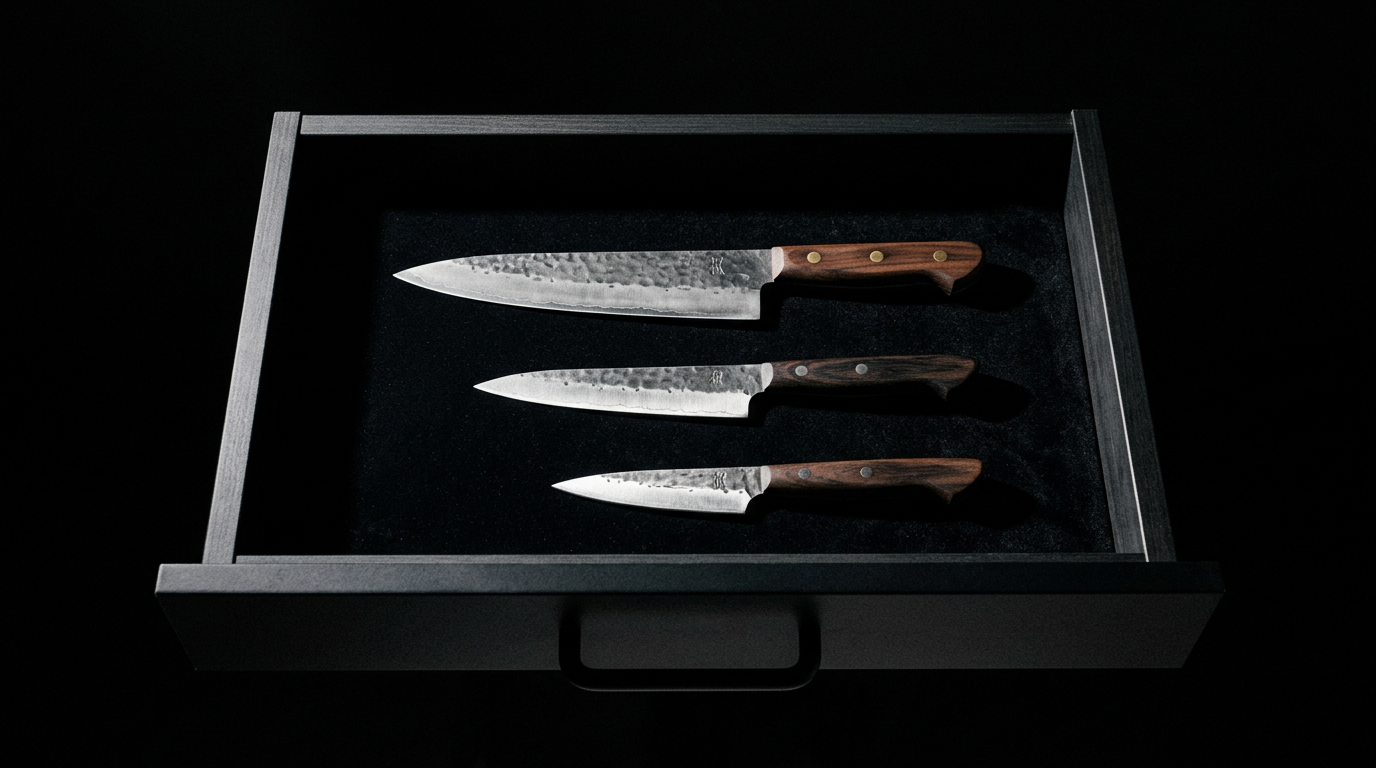
That drawer is not a storage problem. It is a design failure that started the moment someone built a kitchen without asking a single serious question about what actually belongs in a kitchen.
And it is a philosophy failure. Because the moment you accept a junk drawer, you've accepted the premise that your home should accommodate your inability to decide. You've built a room for things you're not sure about. A shrine to deferred choices.
HOW IT STARTS
No one moves into a new home and says: I'm going to keep garbage in this drawer. It starts with one object that doesn't have a home yet. You put it somewhere temporary. Then temporary becomes permanent. Then the next object joins it, because there's already precedent. The drawer has established itself as the place for things without places.
Within two years, that drawer is a complete archaeological record of every decision you didn't make. Everything you bought but weren't sure about. Everything you meant to deal with but didn't. The drawer is honest in a way your living room isn't — it shows you exactly how you actually live, not how you intend to.
"If an object doesn't have a designated home before it enters the house, it doesn't belong in the house."
Most builders don't care about this. They give you 1,200 square feet and call it done. The drawer isn't their problem. The fact that you'll spend the next ten years mildly annoyed every time you open it — that's your problem. They built the box. What you fill it with is yours.
WHAT A GARBAGE HOME DOES INSTEAD
In a Garbage home, there is no junk drawer. Not because the design is clever, but because the design starts from a different question. Not: how many drawers should this kitchen have? But: what does a person who cooks actually need, and where does each of those things live?
Every drawer has a designated function before the first cabinet goes in. The knife drawer holds three knives — a chef's, a bread, and a paring knife. That's it. If you need more than three knives, you're not cooking differently. You're collecting. The spice drawer is sized to an actual human's spice use, not to aspirational cooking. There is no drawer for batteries because batteries have a home in the utility cupboard. There is no mystery key drawer because keys have hooks at the entrance.
When every object has a designated place before it enters the home, the junk drawer never materialises. It doesn't happen by accident. It requires designing around how people actually live — not how they imagine they'll live when they finally get organised.
THE REAL TEST
Here's a question worth sitting with: if you were moving out tomorrow, what's in that drawer that you'd actually pack?
Not rhetorically. Open it. Pull everything out. Look at each object and decide whether it would come with you to a new home — or whether it would go into the bin, quietly, after years of occupying space in your kitchen and faintly irritating you every single day.
Most of it goes in the bin. You already know that. The junk drawer's greatest trick is convincing you that one day you'll need the mystery key.
You won't. And the home I'm building won't have a place to keep it.